Tomorrow is Constitution Day. The Samajwadi Party plans to release its "Jan-Man Manifesto" for 2027 on that very occasion. Yet two moves this week have raised an awkward question. Does the party that waves the Constitution at every rally believe in its first promise, equality?
The first move came late on Tuesday night. The SP released its opening list of candidates for the 2027 Assembly polls. It had five names. Four were Muslim.
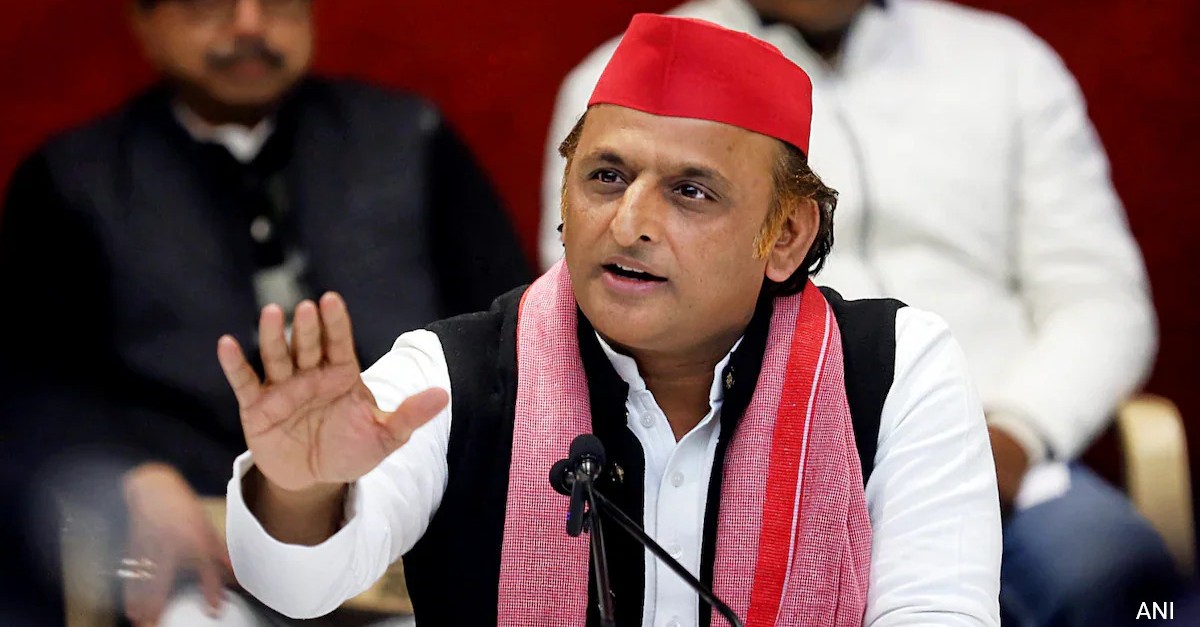
The second came from a party meeting. Akhilesh Yadav said that only PDA would find a place in the cabinet of a future SP government.
अखिलेश यादव ने सरेआम ऐलान कर दिया है कि सत्ता में आए तो उनकी कैबिनेट में सिर्फ PDA (पिछड़ा, दलित और अल्पसंख्यक) ही नजर आएंगे! अखिलेश जी, सवर्ण समाज से ऐसा अलगाववादी रवैया क्यों?
— BJP (@BJP4India) · November 25, 2026 · View post on X
Together the two moves sketch a worrying picture. Tickets by community, ministries by community. And a large part of Uttar Pradesh left outside the door.
Who got the tickets
Four of the five are sitting MLAs, renominated from their own seats. The SP will lean on that fact. Sitting winners, it will argue, have earned another run. Fair enough. But a first list is never just arithmetic. It is a message. This one was loud.
Congress MP Imran Masood said the SP had announced names suddenly while seat talks were still on. To him it showed no seriousness about the alliance.
Cabinet Minister and SBSP chief Om Prakash Rajbhar asked whether the Owaisi–Chandrashekhar pairing had panicked Akhilesh into fielding four Muslims in the very first list. He called it fear of a split in Muslim votes. BJP MLA Ketaki Singh of Bansdih went further and called the SP a ranga siyar, a jackal in disguise.
Shift in Slogan of PDA by Akhilesh
Akhilesh has defended his line in his own words. On Tuesday, in a post on X about the Congress alliance, he wrote, "Baat seat ki nahi, jeet ki hai" — it is not about seats, it is about winning. He also urged that alliance candidates be presented as "PDA candidates".
He has long argued that rights and respect should follow numbers. In August, he promised that an SP government would give PDA communities rights and participation in proportion to their population. Earlier this month, after meeting Rakesh Tikait, he offered a new slogan: "Jo peedit, wo PDA" — whoever suffers is PDA. The "A", he added, also stands for annadata, the farmer. On another occasion, he said it covered agada, the upper castes, too.
If PDA means everyone who suffers, a "PDA-only" cabinet means nothing. If it means only backward classes, Dalits and minorities, it shuts out citizens by birth. The SP cannot have it both ways.
Where the Constitution stands
Legally a party may field whomever it likes. Article 14 binds the State not a party office. A cabinet is the State. Under Article 164, ministers are appointed on the Chief Minister's advice. The Constitution sets no caste or religion test for the job. The oath in the Third Schedule asks every minister to do right to all manner of people, without fear or favour, affection or ill-will. A cabinet closed by birth sits uneasily with that oath.
Articles 15 and 16 bar the State from discriminating on grounds of religion, race, caste, sex or place of birth. The Constitution does allow special provisions for backward classes, Scheduled Castes and Scheduled Tribes. That is the basis of reservation. But reservation was built as a ladder for the excluded. It was never meant as a wall against others.
On this very date in 1949, Dr B.R. Ambedkar warned the Constituent Assembly of a contradiction. India would have political equality — "one man one vote and one vote one value" — while social inequality persisted. His remedy was to close that gap, not to reopen it in another direction.
The Supreme Court has spoken too. In Abhiram Singh (2017), a seven-judge bench held that seeking votes in the name of religion, caste or community is a corrupt practice under the Representation of the People Act. Choosing candidates is not the same as appealing for votes. But when a party's message reads as identity first, the line grows thin.
Akhilesh argues that PDA groups make up about 90 per cent of the state yet hold few top posts. He once pointed to Ayodhya, where, he said only three of 13 key administrative postings went to PDA officers. To his supporters, PDA is a correction, not an exclusion.
That argument may win votes. It still leaves a question over tomorrow. Equality in the Constitution is not a share handed out by community. It is a promise to every citizen. A Brahmin farmer in Ballia, a Vaishya trader in Kanpur and a Thakur youth in Gorakhpur live in the same Uttar Pradesh.
When the SP unveils its manifesto on Constitution Day, voters will watch for one thing. Will it promise a government for the PDA or a government for all?