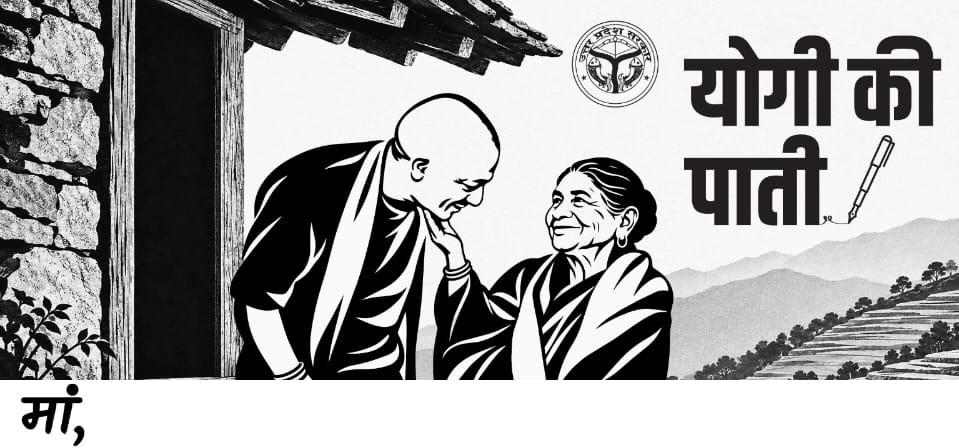
Not in words, but in action, Chief Minister Yogi Adityanath is living out what he wrote in his latest Yogi Ki Paati. The letter came days after his mother Savitri Devi, passed away on 20 November at her ancestral home in Panchur, Uttarakhand.
A son in mourning could have kept his grief private. Yogi chose otherwise, he addressed the letter to every mother in the state. He closed it with an appeal to 25 crore people: become the support of a destitute mother, understand the pain of a deprived one and bring a smile to the face of a sorrowing one.
A letter written in tears, rooted in Sanatan values
The Paati is deeply personal. Yogi recalls the day he stood at the threshold of his home in saffron robes, more than three years after taking sanyas. Following the monastic tradition, he called out for alms. His mother came out. She could hardly believe her eyes.
"Beta, what state have you made of yourself? What was lacking at home that you beg for alms?" she asked. He replied that sanyas was now his dharma. He had come not to stay, but to seek bhiksha. Whatever she gave would fulfil his resolve. He writes that a mother’s love honoured the resolve of her sanyasi son.
The letter invokes Kaushalya’s blessing to Shri Ram and Krishna’s journey from the Mathura prison to Gokul. It reminds readers that a mother’s sanskar shapes a Dhruv or a Prahlad. "A mother can take anyone’s place, but no one can take a mother’s place," he writes.
Then comes the line that links emotion to governance. Some debts can never be repaid, he says, but duty can be done. Since entering public life, he has tried to fulfil that duty towards the matrishakti of the state.
The question is simple, does the record match the words?
Before birth: making motherhood safe
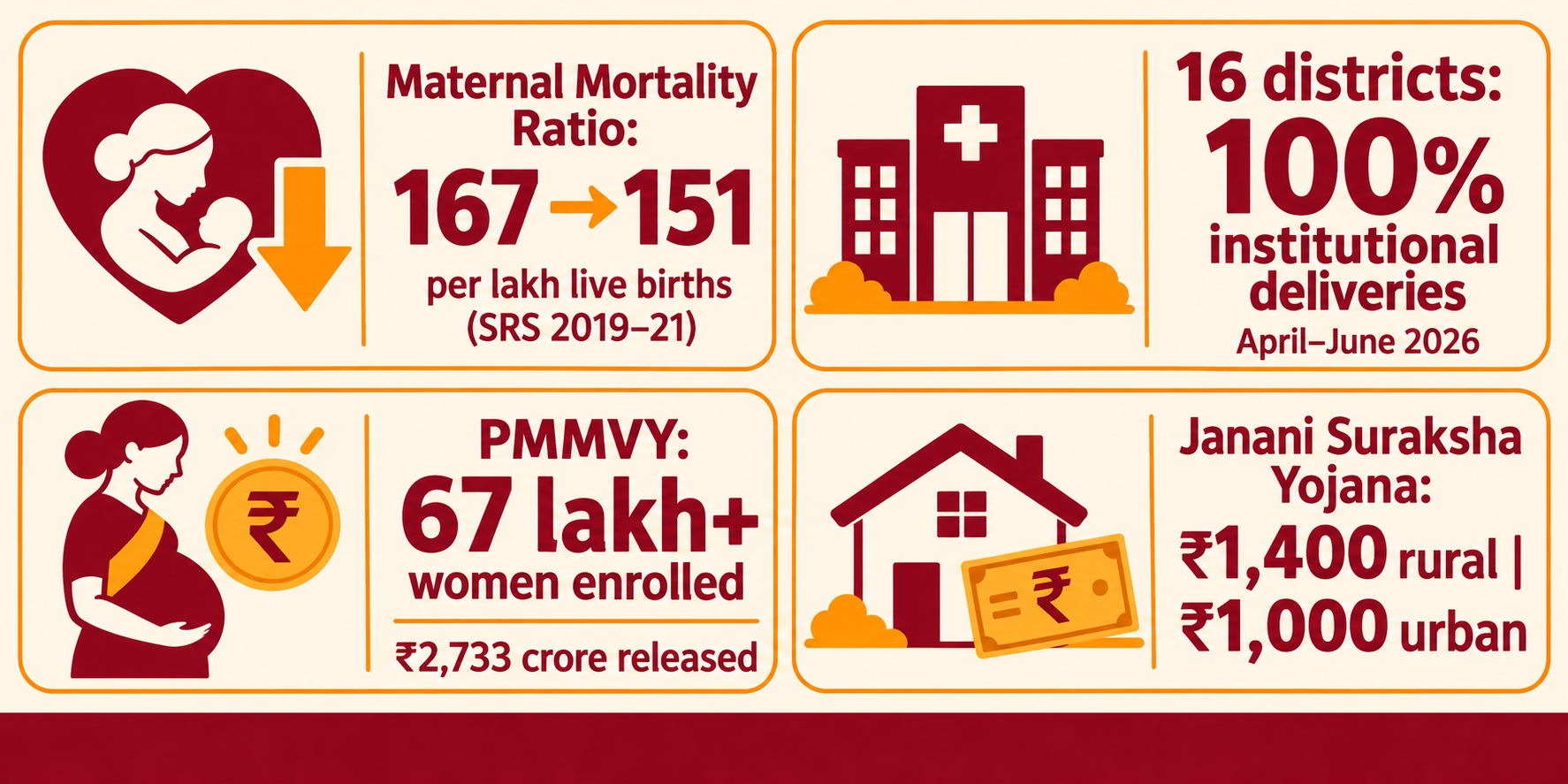
The state’s Maternal Mortality Ratio fell from 167 to 151 per lakh live births, according to the Sample Registration System bulletin for 2019–21. The Chief Minister has said the state now stands close to the national average after lagging far behind for years.
Institutional delivery has been the key. Between April and June this year, 16 districts reported zero deliveries outside a health facility. ASHA workers now reach homes to register pregnant women early. Ambulances carry them to hospitals.
High-risk pregnancies are identified in time. The government has also begun reviewing maternal deaths on a daily basis, so that each loss leads to correction.
Money follows the mother too. Under the Janani Suraksha Yojana, a woman delivering in a rural facility gets ₹1,400, and ₹1,000 in an urban one. The Pradhan Mantri Matru Vandana Yojana adds ₹5,000 through direct benefit transfer. Uttar Pradesh leads the country here, with more than 67 lakh women enrolled and over ₹2,733 crore released.
When a daughter is born
A mother’s first worry after childbirth is often her daughter’s future. The Mukhyamantri Kanya Sumangala Yojana answers that worry.
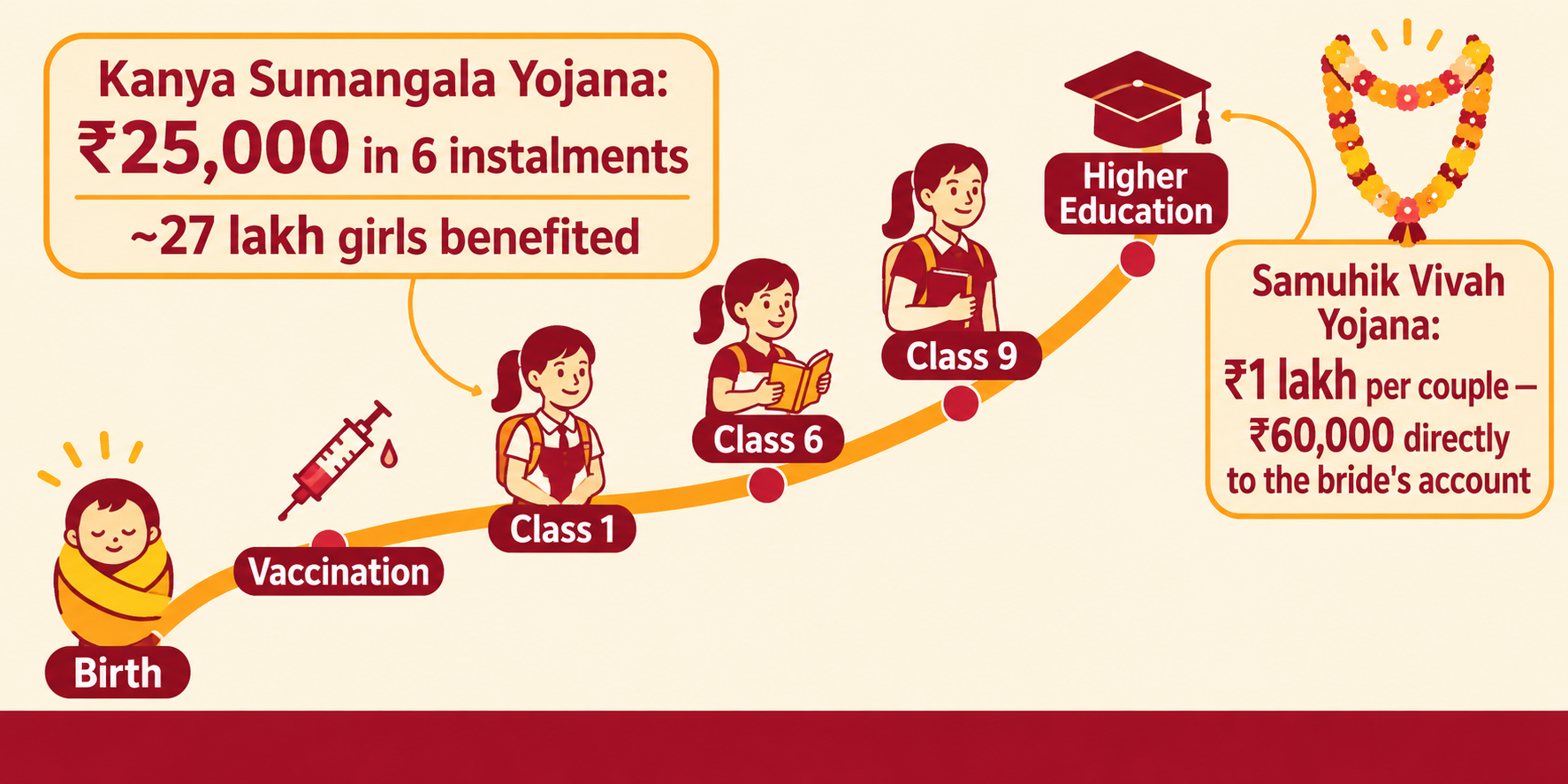
Launched in 2019, the scheme supports a girl from birth to higher education. The amount was raised from ₹15,000 to ₹25,000 in 2024. It comes in six instalments, each tied to a milestone: birth, vaccination, and admission to successive classes. Nearly 27 lakh girls had benefited by January 2026.
It rewards families for keeping daughters healthy and in school. Over time, it changes how a household sees the birth of a girl.
Dignity at the time of a daughter’s wedding
For many mothers in poor households, a daughter’s marriage is a source of fear. Dowry, debt and social pressure weigh heavily.
The Mukhyamantri Samuhik Vivah Yojana, started in 2017, takes that burden away. Assistance was doubled from ₹51,000 to ₹1 lakh per couple from 2025–26. Of this, ₹60,000 goes straight into the bride’s bank account. The income limit was raised to ₹3 lakh so that more families qualify.
These weddings carry no dowry and allow no child marriage. They are open to every caste and community. Yogi has attended such ceremonies in person, blessing over a thousand brides at a time in Gorakhpur.
A hand for the mother left alone
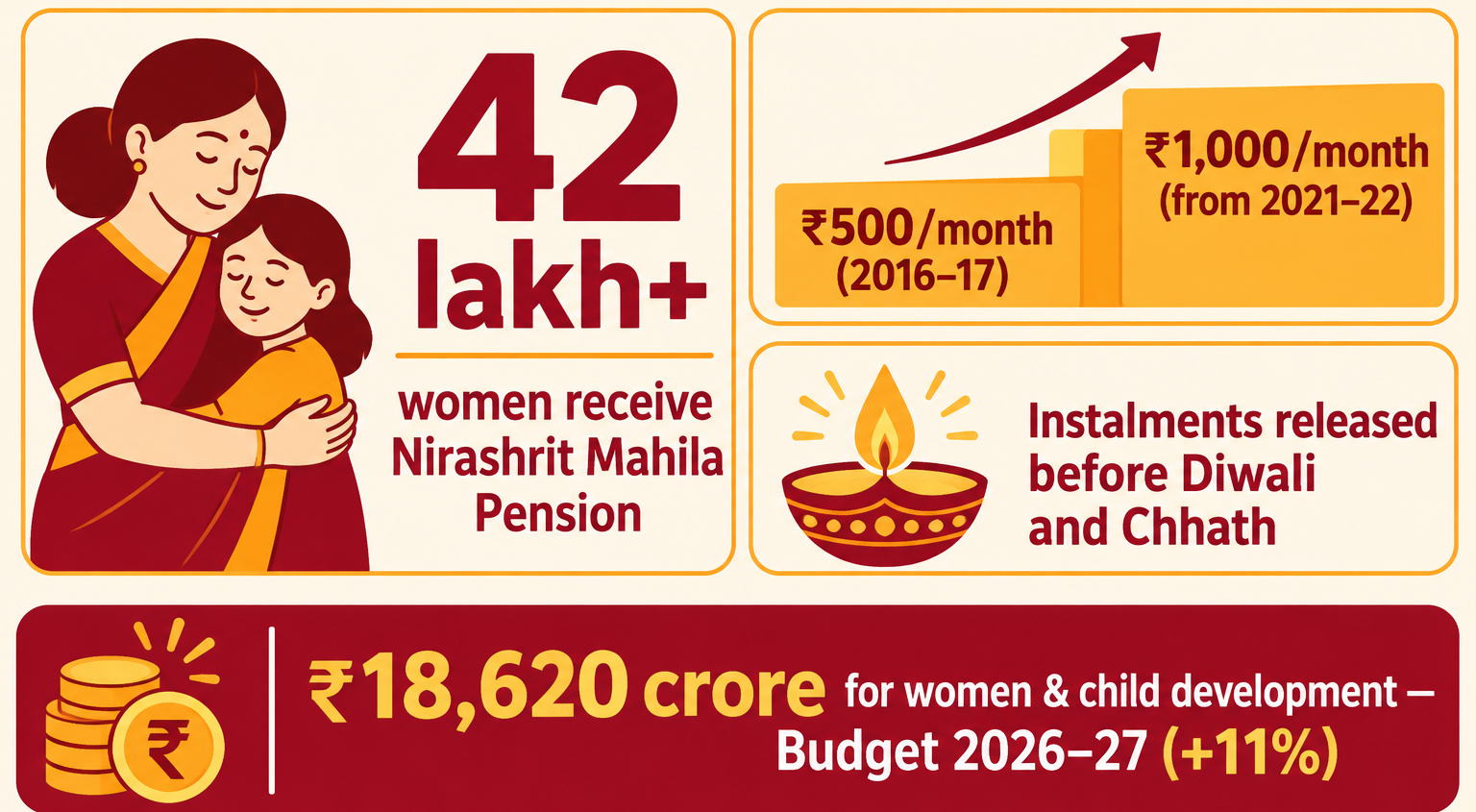
The Paati speaks of the nirashrit mother, the one left without support. The state has a scheme by that very name. Under the Nirashrit Mahila Pension Yojana, women who have lost their husbands receive ₹1,000 every month. In 2016–17, the amount was ₹500. It was doubled from 2021–22. Today more than 42 lakh women receive this pension directly in their Aadhaar-linked bank accounts.
Instalments are often released ahead of festivals like Diwali and Chhath, so that no widow’s home stays dark on a festive night. Verification drives have also removed ineligible names. The aim is that the money reaches the woman who truly needs it.
Intent is best measured in rupees. In the 2026–27 budget, the state set aside around ₹18,620 crore for women and child development. That is 11 per cent more than the year before.
Anganwadi centres, nutrition for pregnant women, girls education and pensions all draw from this pool. Together they form a chain of support that runs from pregnancy to old age.
Matri vandana as governance
The Yogi Ki Paati series recently completed 50 weeks. Its letters have been compiled into a coffee table book. Many have been about development, health and youth. This one is different. It comes from a son’s grief.
In the Sanatan tradition, matri vandana is not limited to worship at home. It extends to every mother in society. Yogi’s appeal turns that idea into a public duty.
The schemes show that the government has tried to take up that duty first. A safe delivery, daughter in school. A wedding without debt, monthly pension for a widow. Each is a small answer to the question his letter asks.
Yogi wrote that true respect for a mother lies in wiping the tears of another. His mother gave alms to a sanyasi son. The son, now in office seems to be repaying that bhiksha to lakhs of mothers across Uttar Pradesh.