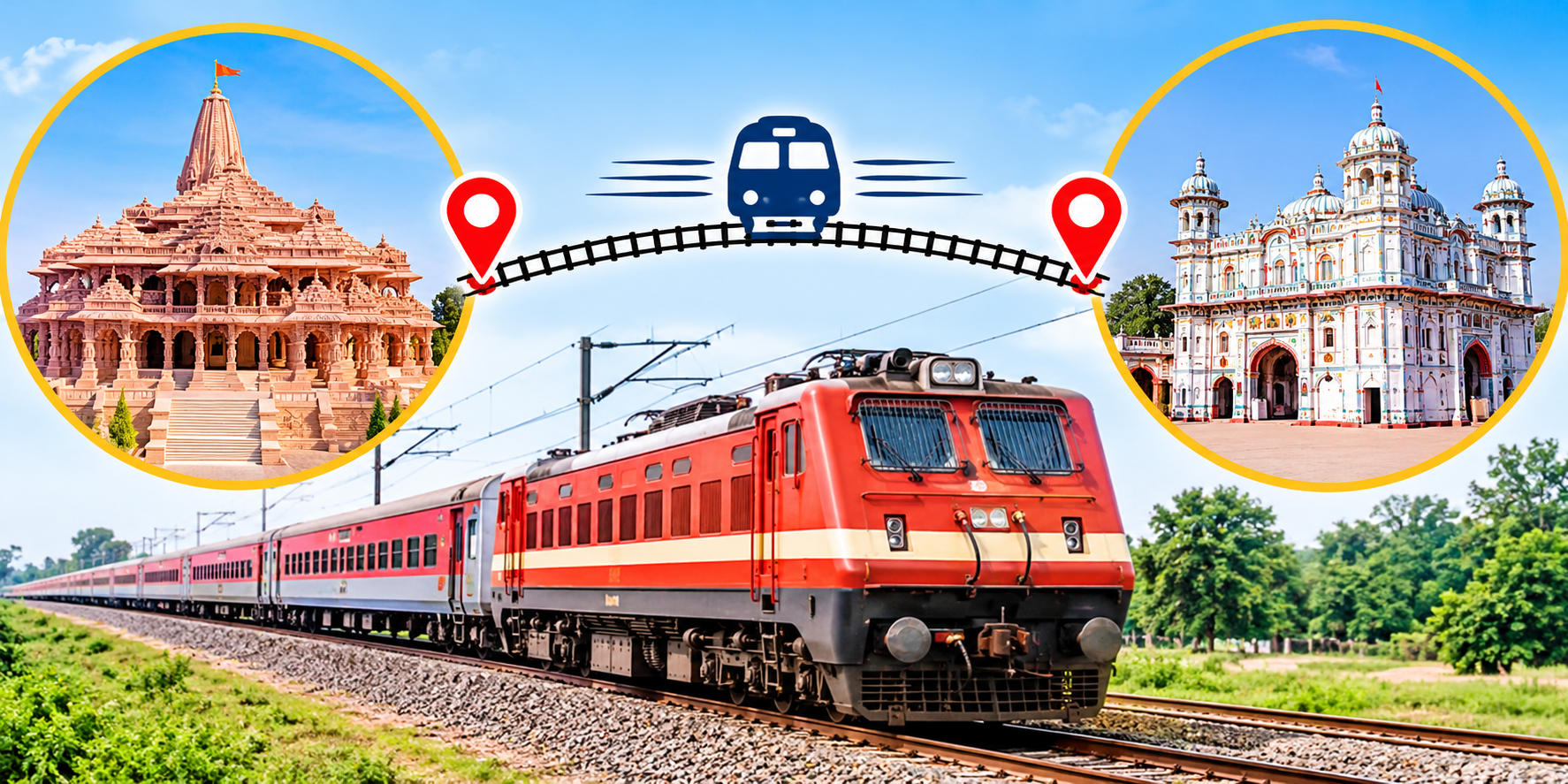
A railway line now traces one of the oldest journeys in Indian tradition. The Saryu-Kamala Express connects Ayodhya Dham in Uttar Pradesh with Janakpur Dham in Nepal. These are the two towns most closely tied to Lord Ram and Mata Sita.
Uttar Pradesh Chief Minister Yogi Adityanath welcomed the service warmly. He thanked Prime Minister Narendra Modi for bringing the two dhams onto the Indian Railways network. He also greeted Nepal's Prime Minister Balendra Shah, who witnessed the occasion.
A pilgrimage made simpler
The practical change is easy to grasp. According to Yogi Adityanath, worshippers from Nepal can now travel directly to Ayodhya Dham. There, they can seek darshan of Prabhu Shri Ram Lalla.
The journey works the other way too. Indian pilgrims can now reach Janakpur Dham and offer prayers to Mata Janaki. Mithila reveres Sita by that name, after her father, King Janak.
For devout families, this matters deeply. Tradition holds that Ram travelled to Janakpur to marry Sita. Visiting both places has long carried special meaning. A direct rail link turns that wish into a far easier trip.
Every year, Janakpur celebrates Vivah Panchami, which marks the divine wedding. Processions from Ayodhya have traditionally joined these festivities. Such journeys now have a dedicated train.
The timing adds weight. Ayodhya has seen a steady rise in visitors since the Ram Janmabhoomi temple's consecration in January 2024. Janakpur, too draws worshippers from both sides of the border.
For many elderly worshippers, long road journeys across the border can be tiring. A train offers a gentler way to complete a pilgrimage of a lifetime.
Ayodhya and Mithila together again
Yogi Adityanath placed the train in a deeper frame. He described it as the revival of a sacred and ancient union between the cultures of Ayodhya and Mithila.
The train's name carries that symbolism. The Saryu flows past Ayodhya, the city of Ram. The Kamala is a river of Mithila, Sita's homeland. Naming the service after both rivers ties two cultures into one route.
Mithila itself stretches across north Bihar and Nepal's Madhesh region. A border runs through it. Yet its language, Maithili, and its customs flow freely across that line.
The connection between the two regions is old. Mithila's wedding songs still celebrate Ram as the region's beloved son-in-law. The train gives that old affection a modern form.
Sita's story sits at the heart of Mithila's identity. Its famous Madhubani paintings often depict scenes from her life and her wedding to Ram.
Where heritage meets development
The Chief Minister called the rail service a remarkable example of 'Virasat aur Vikas'. The phrase means heritage and development moving forward together.
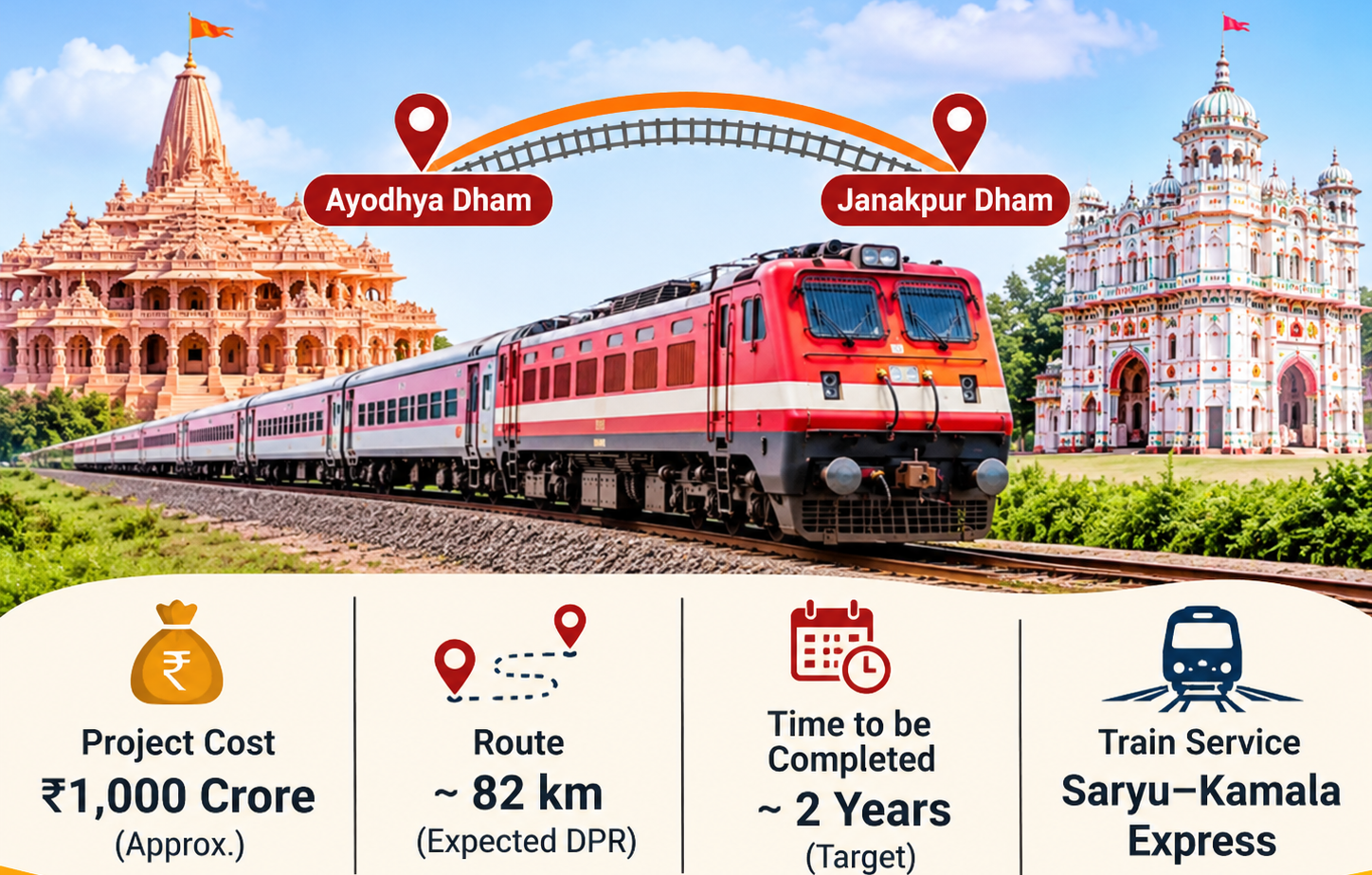
It reflects a wider approach in governance. Faith and progress are not treated as separate goals. Modern infrastructure is built around places of civilizational importance. Better connectivity serves the pilgrim and the host town alike.
Ayodhya has already seen this model at work; new roads, an airport and a redeveloped railway station have come up in recent years.
On the ground, the benefits rarely stop with pilgrims. Hotels, eateries, guides and small traders in pilgrimage towns depend on steady footfall. A cross-border train opens a new stream of visitors in both directions. A train named after two rivers shows how infrastructure can carry memory along with passengers.
The roti-beti relationship
Yogi Adityanath said the India–Nepal relationship goes back thousands of years, to the Puranic age. He said it binds the two peoples through faith and affection.
Shared rivers and shared families shaped this relationship, he noted. In everyday speech, people call it a 'roti-beti' relationship. The phrase speaks of sharing bread and giving daughters in marriage.
For families along the border, this is lived reality not only in slogan. Marriages across the boundary remain common in the Mithila belt. Relatives cross over for festivals, weddings and funerals.
A train between two sacred towns adds another thread to that fabric. A daughter married in Janakpur and her family in Ayodhya are now one train ride apart.
An open border built on trust
The Chief Minister also spoke of the wider relationship between the two nations. He described the open India–Nepal border as a unique example of trust in the world.
Few neighbours anywhere let citizens cross freely without visas or passports. India and Nepal have maintained such an arrangement for decades. The 1950 Treaty of Peace and Friendship gives this openness its formal basis. In practice, it rests on familiarity built over generations.
Yogi Adityanath added that India stands with Nepal in every moment of joy and sorrow. The message mattered all the more with Nepal's Prime Minister present.
He welcomed Balendra Shah on behalf of Ayodhya and all the people of Uttar Pradesh. He also congratulated the citizens of both countries on what he called a historic moment.
The occasion fits India's emphasis on its immediate neighbourhood. Ties of culture and faith give that outreach a footing that trade figures alone cannot provide. In meaning, it reaches much further. It reconnects two places that Indian tradition has always seen as joined by a divine marriage.
Steady use by pilgrims, traders and families will decide its long-term value. If that happens, the route could strengthen ties that no treaty alone can build. The launch also signals intent. Cultural memory can shape modern policy and faith can bring nations closer. For Ayodhya and Janakpur, the path between Ram and Sita now has rails beneath it.