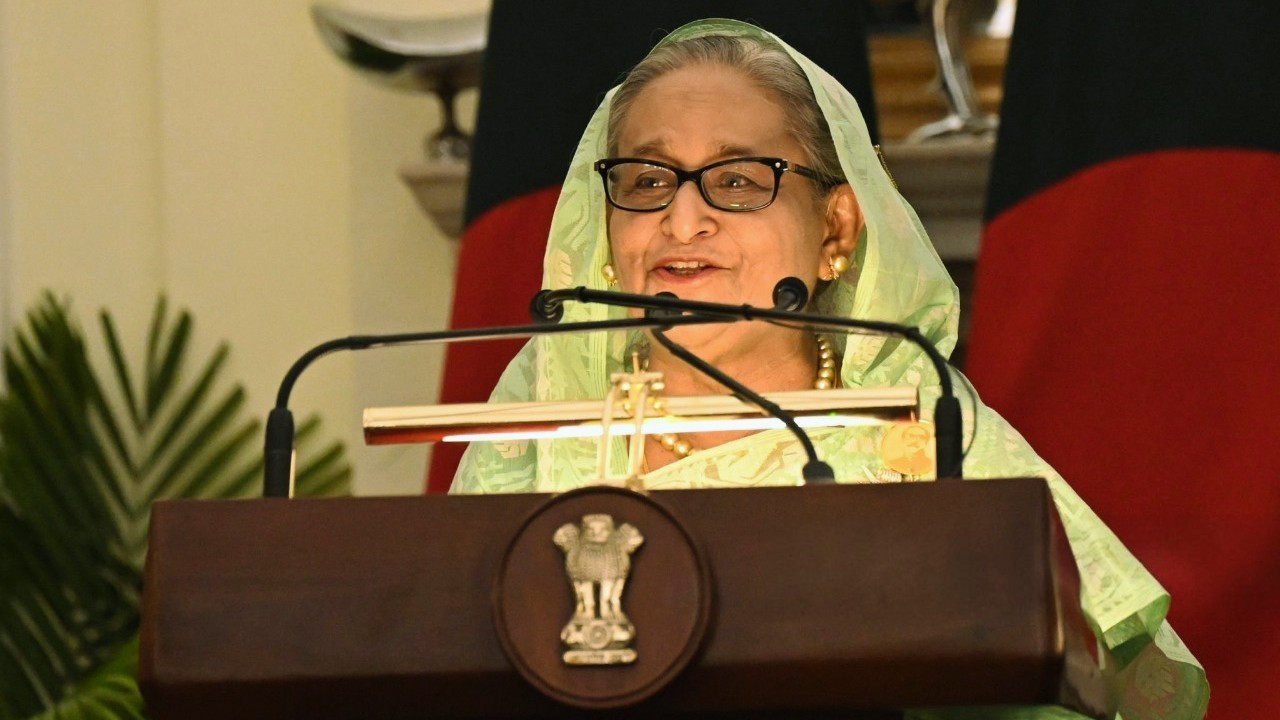
After more than two years away, Sheikh Hasina has named the day she wants to go home. The former Bangladesh Prime Minister plans to land in Dhaka on December 16. The date is no accident. It is the day her country celebrates its birth as a free nation.
Her spokesperson shared the plan on Tuesday. According to the spokesperson, Hasina is preparing to return on Victory Day itself. She has also asked the Bangladesh government to send an official aircraft to fly her back.
A Date Rooted in 1971
Victory Day marks the triumph of the 1971 Liberation War. On December 16 that year, Pakistani forces surrendered in Dhaka. A new nation rose after nine months of bloodshed and resistance.
The Pakistani army and its local collaborators carried out mass killings across the region. Millions of refugees fled into India to escape the violence.
Across Bangladesh, the anniversary is a public occasion. Families gather for parades and cultural programmes. Leaders lay wreaths at the National Memorial in Savar, and the country pays tribute to its freedom fighters.
For Hasina, the day also carries a personal weight. Her father, Sheikh Mujibur Rahman, led the movement that ended in that victory. By choosing this date, she links her return to the founding memory of the nation.
December 16 holds meaning in India too. Indian soldiers fought alongside Bangladeshi freedom fighters in that war. India observes the same date as Vijay Diwas, honouring those who laid down their lives.
The Request for a State Aircraft
Hasina's demand for a government aircraft goes beyond travel arrangements. A state plane would mean Dhaka itself carries her home. It would turn a private journey into an official arrival. It would also signal a measure of acceptance from the state she once led.
The request puts a direct question to the government that replaced her. No response from Bangladeshi authorities had come to light at the time of the announcement. Their answer will shape how the planned return unfolds, and whether it happens at all. With the date already fixed, Dhaka has only weeks to decide.
More Than Two Years in India
Hasina has lived in India since she lost power. Her exit came in August 2024, after weeks of student-led protests in Bangladesh. She left Dhaka and took shelter across the border.
That departure ended a long run at the top. Hasina had served as Prime Minister from 2009 until her ouster. She had also held the office earlier, from 1996 to 2001.
New Delhi has hosted her throughout this period. For India, she was a partner of long standing. During her years in office, the two neighbours worked closely on trade, connectivity and border security.
Politics in Bangladesh has changed sharply in her absence. The Bangladesh Nationalist Party now governs the country. Its leader, Tarique Rahman, took the oath as Prime Minister in February 2026.
The legal picture has shifted as well, in November 2025 a special tribunal in Dhaka sentenced Hasina to death in absentia. The case related to the deadly crackdown on protesters during the 2024 unrest.
Questions Before the Homecoming
December 16 is now a little over three weeks away. Several questions remain open. The spokesperson's statement, as reported, does not say how Hasina will travel if Dhaka turns down her request. Nor does it spell out what she expects once she lands.
The verdict against her adds another layer of uncertainty. A return would bring her within reach of the very tribunal that convicted her. How the authorities respond will draw close attention, at home and abroad.
On Victory Day, the capital fills with ceremonies, crowds and tight security. An arrival that day would unfold in full public view.
For India, the moment calls for quiet care, as New Delhi has stood by a long-time partner while keeping its doors open to Dhaka's new leadership. Any movement on Hasina's return will touch both of those relationships.
Inside Bangladesh, opinion on Hasina remains sharply divided. Awami League workers have spent two difficult years without their leader. Her critics, meanwhile hold her government responsible for the bloodshed of 2024.
Hasina's choice of date is a political statement in its own right. It reminds Bangladeshis that their freedom was won through sacrifice, not handed over. It also recalls the role her family played in that struggle.
Fifty-five years ago, December 16 brought Indians and Bangladeshis together in a shared victory over oppression. This year, the same date may open a new and uncertain chapter for one of the region's most enduring political figures. Dhaka's reply to her request will reveal much about the kind of country Bangladesh intends to be.